
A USDA loan is a mortgage backed by the U.S. Department of Agriculture that lets some North Carolina buyers purchase a home without a down payment. It is for people buying in an area USDA treats as rural, with household income within the program's limits, who plan to live in the home. If you are a renter wondering whether "zero down" is real, this article explains how it works and what it still leaves for you to pay.
What is a USDA loan, and why does it need no down payment?
USDA Rural Development runs housing programs meant to keep rural and small-town communities growing. The best-known one for buyers is the USDA-backed loan for private lenders. You do not borrow from USDA. You borrow from a participating private lender, and USDA promises to cover part of the lender's loss if the loan goes bad.
That promise is what makes zero-down financing possible. Lenders usually ask for a down payment because it reduces their risk. With a government guarantee behind the loan, the lender takes less risk, so the program lets you borrow the full purchase price of the home.
There is also a direct loan, made by USDA itself, for households with lower incomes. It is a smaller part of the picture, and you apply through USDA rather than a bank.
Does "zero down" mean zero cash to close?
No, and this is the most common misunderstanding. A down payment is one cost of buying. You may still owe an appraisal, inspection, title and recording charges, prepaid taxes and insurance, and loan fees. USDA loans also carry an upfront fee, which can be added to the loan or paid as part of closing, plus ongoing mortgage insurance built into the monthly payment.
Our guide to how much cash you need to buy a house walks through what makes up cash to close. If you want the wider picture of buying with little saved, can you buy a house with no down payment in North Carolina compares the main paths.
Where can you use a USDA loan?
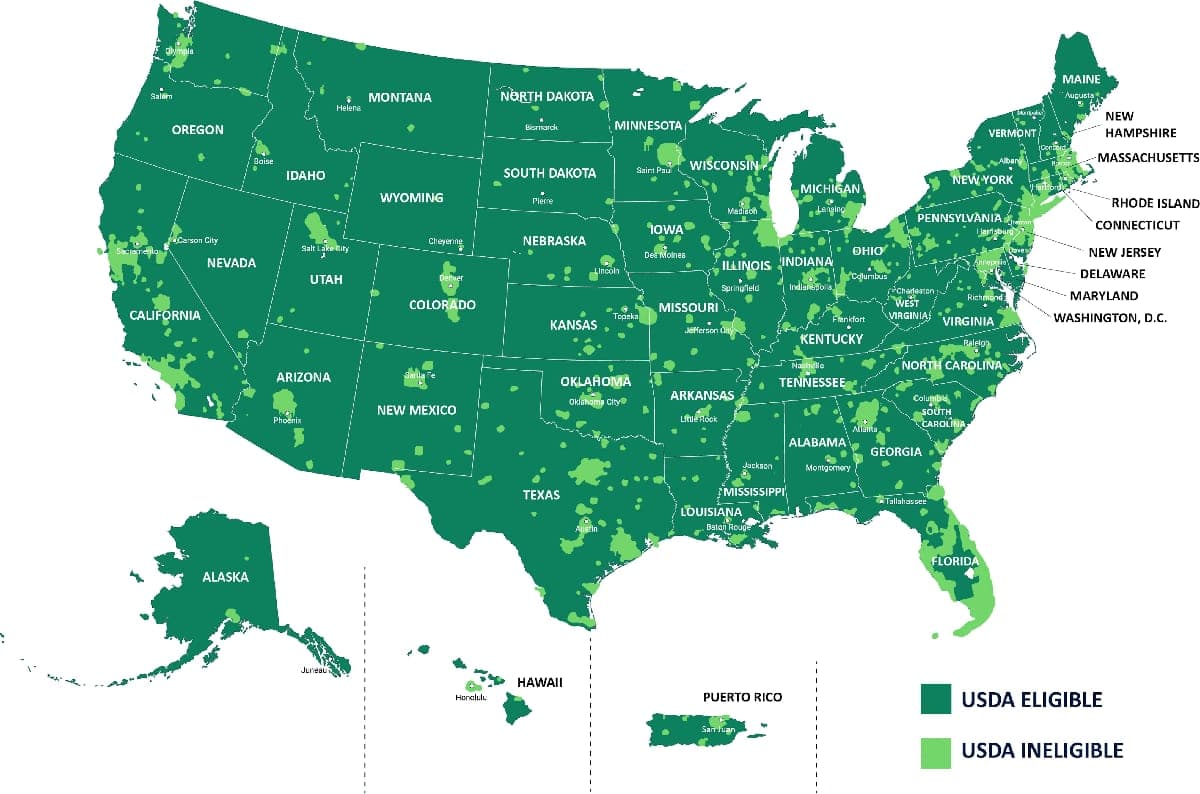
The home has to be in an area USDA has designated as eligible. That is based on the property's address, not on where you work or where you live now. Many people are surprised to learn that eligible areas include small towns, and in some counties the edges of places that feel like suburbs. Larger cities and their dense centers are generally left out.
USDA publishes a property eligibility map on its website. You enter the address of a home you are considering and it tells you whether the location qualifies. Boundaries are reviewed and can change over time, so check an address before you fall in love with a house, and ask your lender to confirm it again before you sign a contract.
The home itself also matters. It must be a modest, safe single-family home that will be your primary residence. Investment properties and vacation homes do not fit the program.
Who may fit the income and credit rules?
USDA sets an income limit that depends on where you live and how many people are in your household. It counts income from everyone who will live in the home, not just the person on the loan. The limit is meant to direct the program to households that might struggle to buy otherwise, so a higher earner may not fit even in a rural county.
Credit works differently from the income rule. USDA sets a general guideline, but the lender chooses what it will accept within it, and some lenders are stricter than others. If your credit is a worry, read can you buy a house with a low credit score before you apply, then talk with more than one participating lender.
You also need steady, documented income and a payment that fits your budget. Lenders look at how your monthly debts compare with your income, and USDA applies its own limits on that comparison.
How do USDA loans work with down payment assistance?
A USDA loan removes the down payment, but assistance can still matter because it may help with closing costs. Several North Carolina programs are written to pair with USDA loans.
- The Gastonia Homebuyer Assistance page explains a city program that works alongside FHA, USDA or conventional first mortgages, with its rules and source.
- The Cleveland County CDC page covers a deferred second mortgage paired with a USDA loan or the state's own mortgage product.
- The NC Home Advantage Mortgage page shows the statewide alternative, a different first mortgage with forgivable assistance, so you can compare it with a USDA loan.
Each page shows the current amounts, income rules and sources. Pairing rules differ from program to program, so a program that works with a USDA loan in one place may not in another. The page and a participating lender can tell you.
What are the steps to getting a USDA loan?
1. Check the address
Before anything else, test the area. Use USDA's property eligibility map for any home you are seriously considering, and for the towns you are searching in.
2. Gather your household income
Add up income for everyone who will live in the home and compare it with the limit for your county and household size. Your lender will do the formal calculation, but knowing the rough answer saves time. The find programs check can show which North Carolina programs may fit your situation.
3. Choose a participating lender
Not every lender makes USDA loans. Ask whether the lender is approved for USDA, how often it closes them, and whether it also knows the local assistance programs you are considering. Recent changes to how USDA works with lenders are covered in the USDA lender pilot and what North Carolina buyers should know.
4. Get pre-approved and shop
Pre-approval tells you what the lender expects you to qualify for, but the loan still needs a home in an eligible area that passes the appraisal. Make sure your agent knows from the start that you are using a USDA loan.
5. Go through underwriting and closing
The lender submits the file for USDA's backing. Expect requests for pay stubs, tax returns and bank statements. Timelines can run longer than with some other loans, so build in room before your contract deadlines.
What should you ask a participating lender?
- Is this address in a USDA-designated area today?
- Does my household income fit the limit for this county?
- What will the upfront fee and monthly mortgage insurance be, and how are they charged?
- Which assistance programs have you closed alongside a USDA loan?
- How long do USDA loans currently take from contract to closing?
- What credit and debt-to-income standards do you apply on top of USDA's?
What does a USDA loan not do?
It does not cover every cost, it does not apply to every property, and approval depends on the lender and USDA. It is also not a gift: you repay the loan, with interest. The monthly payment still has to fit your budget, and you generally must live in the home as your main residence.
The bottom line
A USDA loan can make a home purchase possible for North Carolina buyers who have steady income but little saved, as long as the home is in a designated area and the household fits the income limit. Zero down does not mean zero cash, so plan for closing costs and ask early how assistance might help.
Your next step is to check the address of any home you like, then speak with a participating lender. If you want to see a statewide option beside a USDA loan, start with the NC Home Advantage Mortgage page, which lists its rules and source.